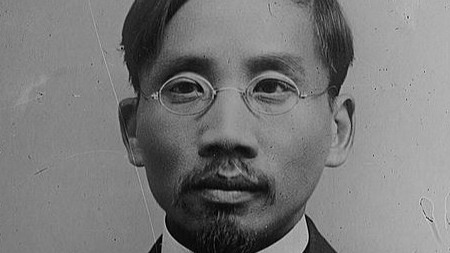
Cai Yuanpei
Introduction
Cai Yuanpei (1868-1940) was a prominent Chinese philosopher and educator who played a significant role in the modernization of Chinese education during the early 20th century. He is most renowned for his influence on Peking University as its president from 1916 to 1927, where he advocated for academic freedom and the inclusion of diverse schools of thought. Cai's contributions to education reform and his advocacy for the arts have left a lasting impact on Chinese culture and education.
Early Life and Education
Cai Yuanpei was born in Shaoxing, Zhejiang province. He demonstrated exceptional academic abilities from a young age, passing the imperial examination at the age of 26 to become a Jinshi, the highest and most prestigious degree in the imperial examination system. His early education was grounded in Confucian classics, but he later became exposed to Western ideas and philosophies, which would significantly influence his educational reforms.
Contributions to Education
In 1918, Cai initiated the foundation of the Beijing Fine Art School, which aimed to cultivate not only artists and art teachers but also to instill a public appreciation of art as a means to understand and improve the world. This school later became part of the Central Academy of Fine Arts in Beijing, a pivotal institution in China's art education landscape.
As the president of Peking University, Cai Yuanpei implemented a series of reforms to promote intellectual freedom and diversity. He invited scholars with various ideological backgrounds, including Marxists and anarchists, to teach at the university, thus transforming it into a hub of progressive thought and discourse in China. Cai emphasized the importance of a comprehensive education that included both sciences and humanities, advocating for the integration of modern Western educational models with traditional Chinese learning.
Philosophy and Beliefs
Cai Yuanpei was an advocate for the integration of Chinese and Western philosophies. He believed in the necessity of adopting Western scientific methods while preserving essential elements of Chinese culture. His educational philosophy emphasized the development of individual character and moral integrity over rote learning and memorization. Cai was also a proponent of aesthetic education, believing that exposure to art and beauty could foster a more harmonious and enlightened society.
Legacy
Cai Yuanpei's legacy in Chinese education is profound. His ideas laid the groundwork for subsequent educational reforms in China and influenced countless educators and intellectuals. The principles of academic freedom and the pursuit of knowledge that he championed at Peking University continue to resonate in Chinese educational policy and practice.
His commitment to the arts and education is celebrated through various cultural and academic initiatives, such as the Century Masters documentary series, which highlights his contributions alongside other luminaries in Chinese history. Cai's impact extends beyond education; he is remembered as a visionary who sought to bridge cultural divides and cultivate an open and progressive society.








